Lyrics First or Melody First? Two Routes into a Song
Lyrics first or melody first? Compare two songwriting routes and choose a starting point that gives your words, tune and song room to grow.
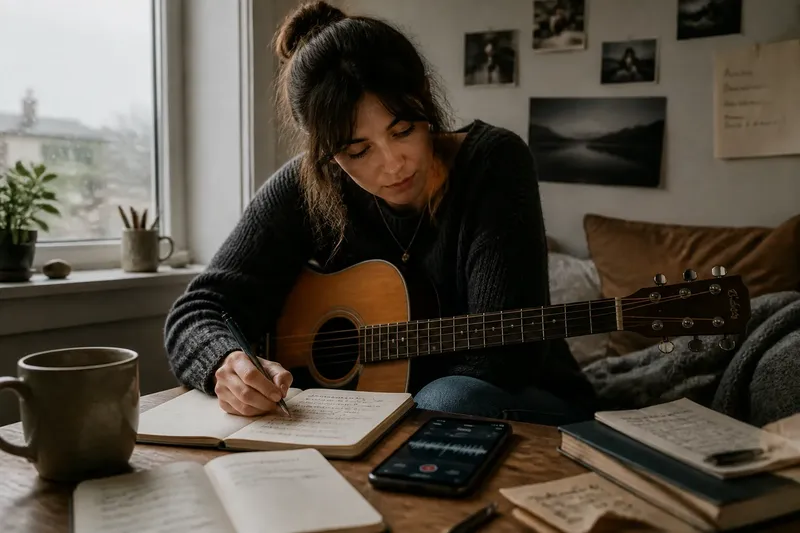
A notebook holds a line about a train leaving before dawn; a phone holds a melody hummed while walking home. Either fragment can become a song. The choice between lyrics first or melody first is less about finding the correct method than noticing which fragment already has energy—and what it asks you to do next.
Songwriting often begins with something incomplete: a phrase, a rhythm of speech, a tune, a chord loop or even a mood. Starting with words gives the song a subject and a voice early. Starting with melody gives it a shape the listener can feel before the words explain anything. Each route opens doors and sets limits, and the writer can change routes whenever the song needs it.
Words first give the song a speaking voice
A lyric-first start suits a writer who has a scene, thought or character to explore. Write a sentence in ordinary language before trying to make it sing. Keep the detail that feels alive: a wet sleeve, an unanswered message, a cup left on the windowsill. Specific images can give a broad feeling somewhere to land.
Next, read the line aloud at a natural pace. Listen for the words that carry emphasis and the places where you would pause. Those features can suggest the melody’s rhythm. A line with several quick syllables may want a nimble phrase; a short, emotionally loaded word might need space around it.
Words also bring built-in constraints. A phrase may be difficult to sing because its consonants collide, its stresses fall awkwardly, or its vowels do not sit comfortably on the notes you imagine. Revise for sound as well as sense. A lyric need not preserve every syllable of the original sentence if a cleaner version keeps its meaning and feels natural in the mouth.
For a lyric-first draft, separate the task of writing from the task of polishing. Put down a rough verse without demanding a rhyme at every line. Then speak it, tap its natural pulse and mark the words that seem to deserve musical emphasis. This leaves room for the melody to shape the language instead of forcing the first draft to carry the whole arrangement.
Melody first lets sound lead the meaning
A melody-first start works well when a tune arrives before its subject. Record a quick voice memo or use a simple piano or guitar to keep the idea from slipping away. Sing on an open vowel, hum, or use temporary nonsense syllables. The point is to capture the contour and rhythm, not to pretend the tune already has finished words.
Listen back for the tune’s natural landmarks. Where does it rise? Where does it settle? Which note feels like a point of arrival, and which phrase seems to invite another? These qualities can hint at emotional movement: a lift might feel like a question, while a descending phrase might sound reflective. They are prompts, not fixed meanings.
When words arrive, fit them to the tune’s stresses and phrasing. Sing a candidate line several ways, keeping an ear on whether the important syllable lands where the melody gives it weight. If a strong note carries a throwaway word, try changing the phrase or adjusting the melody. The best revision may alter either side.
Melody-first writing has its own limits. A catchy tune can tempt a writer to fill every gap with words, even when a breath or pause would make the phrase more affecting. Temporary syllables can also cling to a melody, making later lyrics feel trapped in a sound that no longer serves them. Stay willing to reshape the tune once the song’s subject becomes clearer.
Choose the starting point that supplies the missing piece
Ask what the fragment already gives you. If you can name the scene but cannot hear how it should move, begin with the lyric and speak it aloud. If you have a tune but no reason for its changes in mood, keep humming it and search for a situation or voice that belongs there.
Say you have written, “The kitchen clock is louder when you’re gone,” but cannot find a rhythm for it. Imagine tapping the sentence on a table and noticing that the final words slow naturally. You might sing the opening quickly, leave room before “when you’re gone”, and let that phrase settle; the observable result is a line whose musical pause draws attention to the absence without adding an explanation.
Now imagine you have a melody with a long held note at the end of each phrase. Rather than fill those notes with extra syllables, try a short word with an open vowel, or let the phrase end on a breath. The tune’s shape helps you decide what kind of lyric belongs there. These small trials are ways of listening to the material, not rules for what a song must mean.
A useful compromise is to alternate between the two routes. Draft a verse from a concrete scene, sing it, then let the melody suggest a different word or image. Or record a wordless tune, write one line that fits its rhythm, and let that line reveal what the next section might explore. The first idea sets the direction; the next pass tests whether it can carry a song.
How do you decide which route fits a draft?
Can I switch from lyrics first to melody first?
Yes. A starting method is not a contract. If a lyric has become stiff, sing it on a loose melody; if a tune feels empty, try writing a line that gives its rise and fall a point of view.
Should the words or tune change when they do not fit?
Listen for the source of the friction rather than protecting whichever part came first. If the wording sounds unnatural, simplify it; if a melody makes the natural stresses awkward, reshape the phrase. Keep the version that lets both language and sound feel deliberate.
Do lyrics first or melody first change the finished song?
They often influence what the writer notices first. Lyrics-first work may begin with an image or argument, while melody-first work may begin with rhythm, contour or vocal colour. Neither route dictates the finished song, since revision can move between them.
What if I have neither words nor a melody?
Start with a small prompt rather than waiting for a complete idea: describe a room, speak a sentence with a clear rhythm, or hum a short phrase into a voice memo. Keep the fragment that makes you curious enough to continue, then let it lead the next choice.
Give each route a different kind of revision
After a lyric-first draft, check whether the melody lets the listener hear the words that matter. Sing the verse at an easy volume and mark any phrase that requires rushed diction or an unnatural stress. Try trimming, replacing or moving words before adding instrumental detail.
After a melody-first draft, check whether the lyric sounds like a person speaking rather than a set of syllables fitted to notes. Record a rough vocal, then listen without reading the words. If the phrasing feels expressive but the meaning remains hard to follow, clarify the lyric; if the words are clear but the tune feels predictable, alter its rhythm or contour.
For either route, make a simple voice memo of each promising version and name it by the change you made, such as “shorter chorus line” or “verse with pause”. A sequence of rough recordings makes it easier to hear what changed without relying on memory. Keep earlier drafts until you know which decisions still serve the song.
Lyrics first or melody first is a practical choice about where to place attention, not a test of songwriting ability. Begin with the fragment that already has a pulse, give it a clear next task, and let the other half answer back. When neither fragment seems strong, change the prompt: a sharper image can wake a tune, and a new rhythm can reveal the words hiding inside a sentence.