A Listening Walk Through a Folk Tune
A listening walk through a folk tune helps you trace returning phrases, hear small variations and remember how the melody moves from its opening to its close.
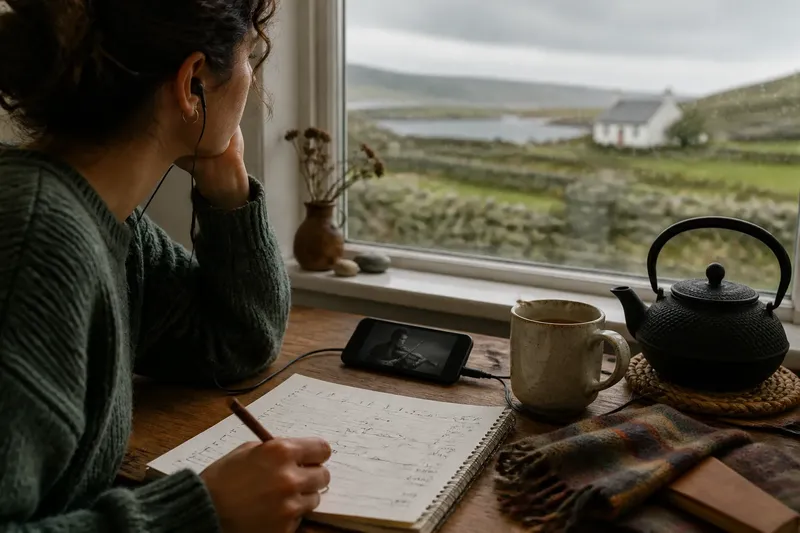
You put on a folk tune while making tea, then realise the melody has gone by without leaving a clear impression. A listening walk through a folk tune gives your attention a simple route: notice what returns, what shifts and how the tune moves from its opening to its close. You need only a recording, a quiet moment and, if useful, a few notes on paper.
This is not a test of musical knowledge. Folk melodies often survive in several versions, and a singer or player may shape a repeated phrase differently each time. The aim is to hear those choices rather than decide whether a performance is correct.
Start with the whole tune before tracing details
Choose one recording and listen all the way through without pausing. Let the voice or instrument carry the melody; leave lyrics, accompaniment and recording quality in the background for now. When it ends, write a plain impression such as “short opening, a return, then a longer ending”.
That first impression gives you a map to check, not a verdict. If you do not know where the tune repeats, that is useful information: on the next listen, attend to the places that seemed to change direction.
Pick a recording with a melody you can follow. A solo fiddle, unaccompanied voice or clear whistle line can make the tune easier to hear than a crowded arrangement, but you do not need to seek out a particular style or instrument. Use the same recording throughout so that changes you notice belong to the performance rather than a switch between versions.
Find the returning phrases without naming them
Listen again and attend to the melody’s larger chunks. A phrase may feel like a musical thought that reaches a pause, settles on a note or leads directly into the next thought. You do not have to know where a bar begins or ends; follow the singer’s breath, a bow’s direction or the point where one contour seems to answer another.
When a phrase sounds familiar, make a small mark on paper: use the letter A for the first phrase, then A again if a later phrase sounds like a return. Give a noticeably different phrase the letter B. These are listening labels, not claims about the tune’s formal structure.
Try to recognise a return by more than one clue. The phrase may start in a similar way, follow a comparable rise and fall or arrive at a familiar resting point. A repeated word or rhythmic pattern can help, but the melody itself is the focus, so do not rely on lyrics alone.
If you cannot tell whether a phrase has returned, leave a question mark beside it. On the next pass, listen to the phrase before it and the one after it. A tune’s shape can make a repeated idea easier to recognise in context than in isolation.
Notice variation inside a repetition
A second appearance of a phrase may be recognisable without being identical. The singer might stretch a syllable, the fiddle player might add a turn or the melody might land on a different note. Keep the A label if the phrase still feels like the same musical idea, then add a short note about the change.
Useful notes are concrete: “opening rises, then falls”; “same start, longer ending”; or “held note arrives sooner”. Avoid trying to name every ornament or pitch. Describe what your ear can confirm rather than translating the sound into specialist language.
Imagine you hear a folk song in which the second verse begins with the same three-note rise as the first, but the singer lingers on the last word and lets the melody descend further. Mark both phrases A, then write “longer, lower ending” beside the second. On another listen, check whether that description matches what you hear.
Variation can also come from the way a phrase is delivered rather than from its outline. A voice may sound more forceful, a note may be softer or the pace may feel looser. Record one such change only if it helps explain why the return feels different; otherwise, keep your attention on the tune’s path.
Follow the tune’s shape with your attention
Now listen for contour: whether the melody seems to climb, fall, hover or turn back on itself. Trace it in the air with a finger, or sketch a loose line on paper. Keep the gesture approximate. A rising line does not need to represent exact pitches to help you remember the tune’s direction.
Notice where the melody gathers momentum and where it seems to settle. A phrase might climb towards a strong, sustained note, then drop into a quieter answer. Another may begin low, circle around a few notes and finish with a leap. Describe the audible movement in ordinary words rather than guessing the tune’s key or scale.
It can help to listen once with your eyes closed, then once while following the words or instrument. The first pass can make the overall contour more apparent; the second can reveal how breaths, syllables or bowing shape the phrases. If lyrics draw your attention away, return to a passage without trying to interpret its story.
When does a phrase count as a repeat?
What if the words change but the melody seems familiar?
Keep the same letter if the tune’s opening, contour or landing point feels recognisable, even when a new verse uses different words. Note which part of the melody persuaded you; the wording can change while the musical phrase returns.
What if the melody changes slightly each time?
Ask whether you can still hear a shared musical idea, such as a similar opening or a familiar rise and fall. If so, label it as a return and record the alteration; if the connection is uncertain, use a question mark rather than forcing a decision.
What if there are no obvious pauses?
Listen for a change in direction, a repeated rhythm or the point where one musical thought seems to answer another. A continuous melody can still have phrases; your labels are listening aids, not boundaries everyone must hear in the same place.
Should I learn the lyrics first?
Only if the words help you follow the performance. You can listen for repeated vowel sounds, breaths or syllable lengths without knowing the text, then return to the words if they make a phrase easier to remember.
Use a specific cue when the listening walk gets stuck
- The accompaniment keeps taking over. Check whether you can follow the voice or lead instrument through a short stretch. If you can, continue listening to that part alone; if you cannot, switch to a clearer solo or lightly accompanied recording.
- Every phrase sounds different. Compare the opening and ending of each phrase. If either part sounds familiar, keep a tentative matching label and note the variation; if neither does, mark the phrase with a question mark and leave the relationship unresolved.
- You lose your place after a pause. Check whether you remember a word, instrument gesture or sound just before the phrase you want to revisit. If you do, use it as a cue and resume there; if you do not, replay the same recording from the beginning and listen for a clearer landmark.
- Your notes become a list of tiny details. Check whether each note helps you recognise a phrase or describe a change. If it does, keep the most useful observation about repetition and shape; if it does not, leave it out and return your attention to the melody.
- You are unsure whether a difference is in the tune or the performance. Compare the corresponding passage in the same recording. If the outline remains familiar, note the ornament, stretched note or altered delivery; if the outline also changes, use a question mark instead of deciding that the phrase is unchanged.
- You cannot tell where one phrase ends. Check for a breath, a held note, a change of contour or a point where the melody seems to answer itself. If one cue stands out, use it as a temporary boundary; if none does, label the larger stretch as one phrase and listen again without forcing a division.
Make one final pass and keep a useful record
For your last listen, follow the tune from beginning to end with your phrase marks in front of you. Check whether the opening idea returns, whether later phrases answer or contrast with it, and how the melody seems to finish. Change a label if the recording gives you a better reason; there is no need to make every phrase fit a neat pattern.
Keep a compact note such as “A returns with a longer ending; B rises before the close”. That is enough to guide another listening session or help you compare a different performance later. If you do compare versions, listen for what remains recognisable and what the new singer or player reshapes, rather than treating one recording as the only valid form.
Say you choose an invented recording of an unaccompanied ballad and hear a short phrase at the start, followed by a similar phrase with a longer final note, then a contrasting rise before the close. First, write A beside the opening phrase; next, mark the similar phrase A and note “longer final note”; then mark the rising phrase B. On a final pass, check whether the ending settles after B. Your resulting note might read “A returns with a longer ending; B rises, then the tune settles”, giving you a clear route back into the melody without pretending the labels are formal analysis.
A listening walk through a folk tune works best when your notes stay close to what you can hear. Keep the same recording and your short phrase map nearby; if you return to the tune later, those simple cues can help you notice a variation you missed before.